
Electric Land Rover Freelander

Electric Rover
Simon Rafferty’s Electric Land Rover Freelander
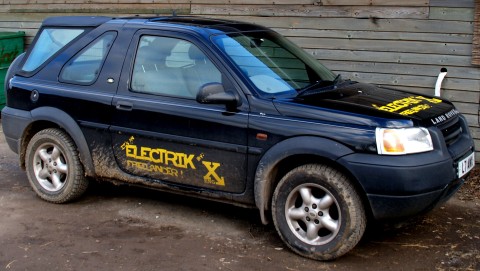
In recent years, there has been an exponential increase in interest for hybrid vehicles as well as full electric ones. With Nissan already marketing their first ever fully electric vehicle, the Nissan Leaf the subsequent resourcefulness of the builders spiked significantly. Its about the creativity of one Simon Rafferty that Im going to tell you about today, and his amazing DIY Land Rover.
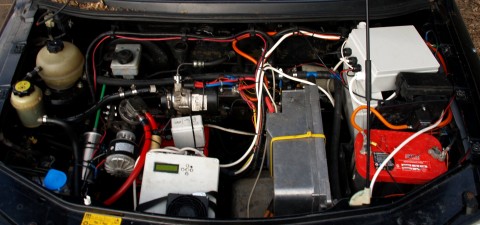
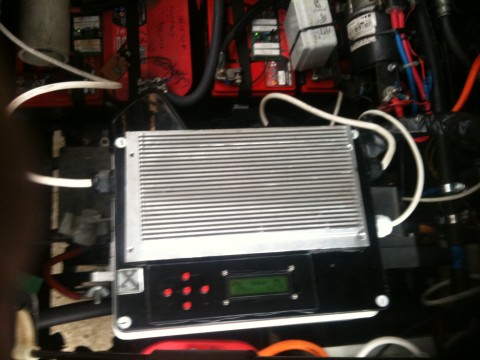
Simon had the luck to stumble onto a traction motor and controller that cost him 70 pounds. There was no logic to buying them, other than that they were awesome looking pieces of scrap metal. Later on, he found out that the actual scraps were the very important bits of a once Hybrid Bus. Like any practical person, he thought “Well if it could drive a bus, it can certainly move a car forward.”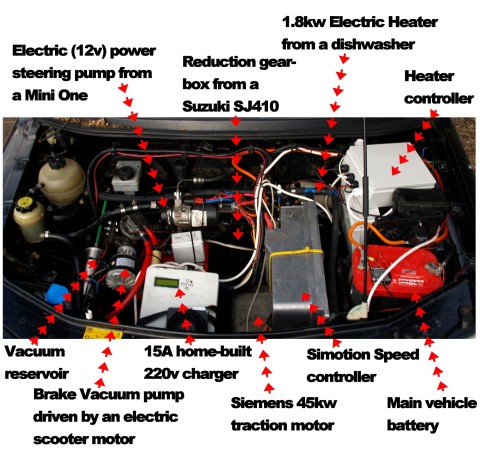
Almost a year later, with the implementation of advices and directions from the DIYElectricCar.com (yes, there is such a thing and yes, it is an excellent research material) as well as Eddy Hustinx (NL), Simon was able to tie the controller to a string of 12 x 12V batteries. The experiment was a big success, everything went better than expected.
The following step was to choose a car that would take in the electric system and he decided on a Freelander. The explanation for this is relatively simple. Being British and a car enthusiast, he knew Land Rovers very well. Another technical advantage was that the spacious car could easily accommodate the chunky batteries without sacrificing comfort. After getting the truck and the engine for half the price of the car, the project took off.
There were no clear autonomy limitations that Simon could work by so he chose his place of work as a first boundary to reach. His commute there would average about 10 miles, round trip. With some basic calculus, it came out that most of the trips in the car would pretty much fit in that particular distance zone, save for about 10% of them which were actually voyages. Furthermore, owning an electric car of any kind attracts zero vehicle tax while also benefiting from a pretty cheap insurance policy.
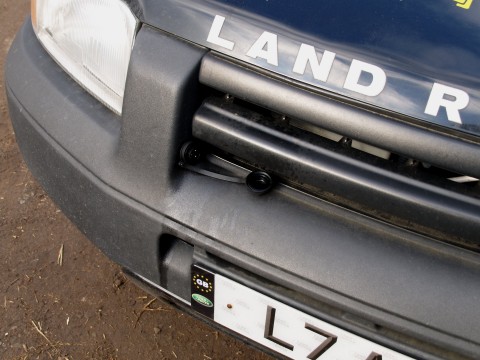
And so it came to pass that the Freelander was customized, from a 4×4 car to a regular two wheel drive one. The decision was made to leave the Freelander in rear wheel drive since it required the least amount of modifications. Because the electric motor averages about 10.000 rpm and is capable of delivering constant power throughout all of its range of rotations, there would be no need for a multi speed gearbox which would reduce efficiency, but rather a single gear modified with a ratio at the wheel between 6 to 1 and 10 to 1. This particular requirement was achieved by the use of a Suzuki transfer box.
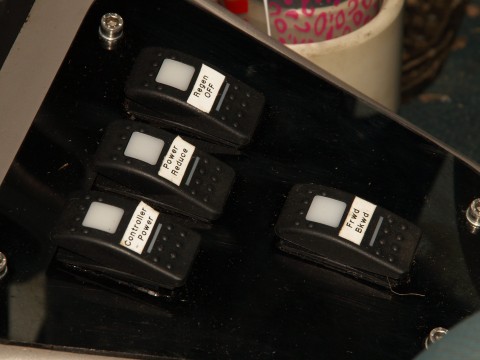
When the engine, gearbox, drive train and fuel tank were removed, the empty spaces were replaced (via a metal sheet base) with the Suzuki transfer box, the speed controller and 6 of the final 15 batteries that needed to be installed. These things dropped perfectly into the engine bay. With modifications the prop shafts and by adding two more battery trays in the fuel tank and the rear load bed places, the E-Lander was taking shape quite nicely, but there was still a long way to do.
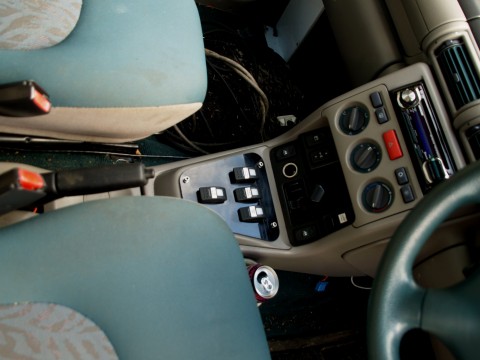
Other important modifications concerned the power steering and the vacuum pumps. The first needed to run continuously, in order to keep you going in the direction you want to go. The issue here was that it required a large amount of power to do so. With a complex system where the pump only works when the car detects youre trying to turn the wheel, this particular aspect of the average vehicle was a little trickier to emulate.
Fortunately, the new Mini Cooper has implemented an even smarter and more efficient system: it runs the pump continuously at 60 watts while not in use and switches to 1000 watts of power for the duration of the turn, which it detects using the back pressure in the hydraulic fluid. The vacuum pump, in its turn also an important part of the vehicle, assists the braking system. Since the ones for sale were rather expensive, Simon decided to manufacture his own with the help of a fan belt operated vacuum pump from a Land Rover Series II and a motor from an electric scooter. The mix worked like a charm, seeing how the scooter motor was far more powerful than required and performed the job without much strain.
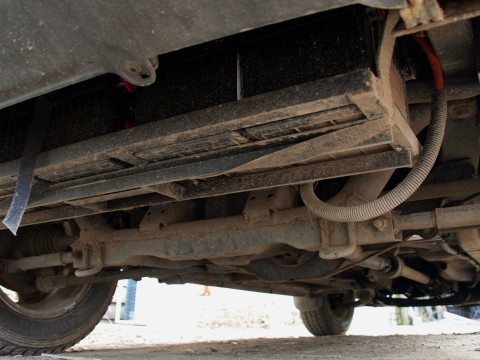
One of the last issues to be solved was heating. The average combustion engine for the Land Rover would put out enough heat to keep the inside at a reasonable temperature but, more important, to de-fog the windows. This was done by using the heater from a dishwasher, which draws out approximately 1.8kw from the main battery, which represents about 10% of the range youd normally be able to travel.
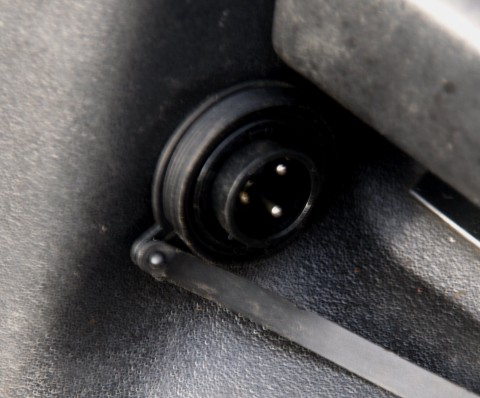
The coup de grace is most certainly the vehicles charger. They are available for purchase, with rather high prices (1000 pounds or more) so the decision was taken to create a DIY Open Source Hardware project (also published in DIYElectricCar.com forum for improvements and mods). The chargers final price was somewhere around 200 dollars.
The Final Outcome
On the road, the E-Lander is excellent. Having covered 1500 miles so far, it proved its just as reliable as any old Rover. The only thing telling it apart from your average truck is the yellow big signs on the sides, announcing that its electric. Calculating the price for running this beautiful little invention, Simon came to realize that it runs 125 kilometers for the price of one liter of diesel fuel. This is very good, at least as good as some of the best hybrids around. Not being too bad on the performance chapter, it does 0 to 100 kms in about 10 seconds.
[author]
[page id=3527]