
Big Off-Road Tires: 37 to 54 Inch Guide, Then and Now
The biggest off-road tires you can buy today run from 37 inches up to 54 inches and beyond. For most trucks the practical choice is a 37 to 40 inch radial mud-terrain. 42 to 46 inch tires are for serious builds with new axles and gears, and 49 to 54 inch tires are for competition trucks and Icelandic glacier rigs. Below is what is on the market now, the classic tires that made big-tire driving what it is, and how to choose.
Before you buy anything, put your truck and your new size into the Big Tire Planner. It shows how much lift you gain, what your speedometer will read and which axle ratio you need.
What counts as a big tire?
Most stock pickups and SUVs roll on 30 to 33 inch tires. In this guide a big tire starts at 37 inches, where a bolt-on job turns into a real build:
- 37 to 40 inches: the biggest size most people can run on a lifted truck with regeared axles.
- 42 to 46 inches: cut fenders, a big lift, strong axles and usually 4.88 or lower gears.
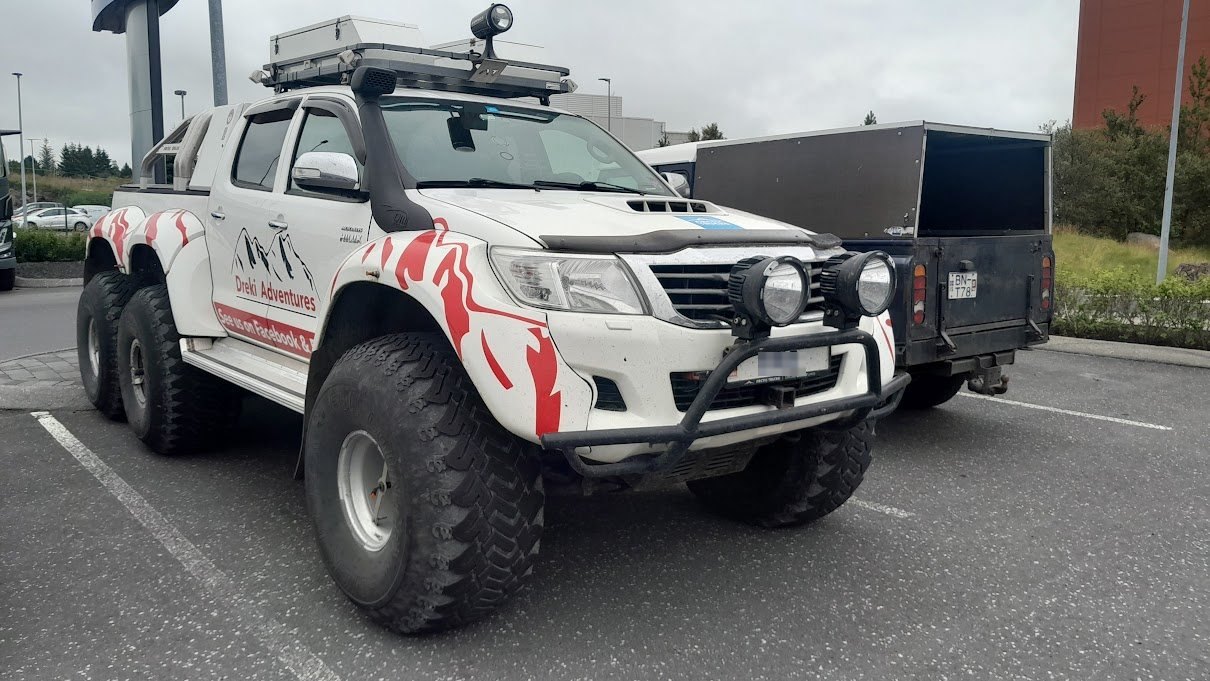
- 49 to 54 inches and up: dedicated off-road and competition trucks, mud boggers and Icelandic super jeeps built for snow and glaciers.
Every inch of tire diameter gives you half an inch of extra ground clearance under the axles. It also costs you gearing, braking and steering strength, so plan the whole truck, not just the tires. Our gear ratio chart shows the numbers.
How big should you go?
An old rule of thumb from Icelandic snow driving: tire size follows the weight of the truck. The heavier the truck, the bigger the footprint it needs to float on soft snow, and the wider the wheel should be to spread the tire.
| Truck weight | Tire size | Wheel width |
|---|---|---|
| 1,000–1,400 kg (2,200–3,100 lbs) | 31–33 inches | 10 inches |
| 1,400–1,800 kg (3,100–4,000 lbs) | 35–36 inches | 12 inches |
| 1,800–2,200 kg (4,000–4,850 lbs) | 38 inches | 14 inches |
| 2,200–3,000 kg (4,850–6,600 lbs) | 44 inches | 16 inches |
| Over 3,000 kg (6,600 lbs) | 46 inches and up | 16 inches and up |
For a truck that mostly sees dirt, rock and pavement you can go smaller. For snow, sand and soft mud this table is a good place to start.
Bias or radial?
Big tires come in two kinds of construction, and it matters more as they grow:
- Radial tires ride smoother, run cooler and wear longer on the highway. Most 37 to 42 inch mud-terrains are radials.
- Bias-ply tires have a tougher, more flexible carcass that wraps around rocks and flattens out at very low pressure. Almost every tire over 44 inches is a bias tire. They need more attention to air pressure on pavement.
In deep snow the debate has gone on for decades. Read what our readers think in Radial vs. Bias for Deep Snow.
Tread types
- All-terrain (A/T): a balance of on-road and off-road manners. Fine in dry powder snow, but poor in wet snow and mud because the small voids pack up.
- Mud-terrain (M/T): the best all-round grip off road, in sand, dirt, rocks and snow, and strong in wet snow and mud. The price is more road noise. For serious off-road driving this is the tread to pick.
- Special treads: tires like the TSL Bogger are built for one job, deep mud, and give up a lot on the road to do it.
Sipes, the thin cuts in the tread blocks, add grip on ice and wet roads. Many big tires come siped from the factory, and you can have others siped. See Tire siping.
Flotation, heat and cold
On snow a big, wide tire at low pressure spreads the weight of the truck over a large footprint, so it floats instead of digging in. The same works in mud and sand, with one difference: snow cools the tire, mud and sand do not.
- Heat: long runs at very low pressure on a hot day build heat in the sidewalls and can ruin a tire. Air back up before the highway.
- Cold: in deep frost the rubber gets stiff and an old tire can crack.
- Sidewalls: thinner, softer sidewalls work better at low pressure and weigh less, but are easier to cut on rocks.
37 to 42 inch tires you can buy today
These are the sizes most lifted Jeeps, Broncos, Tacomas and full-size pickups run.
- BFGoodrich Mud-Terrain T/A KM3. The best-known radial mud tire in North America. It goes all the way up to 42x14.50R17.
- BFGoodrich Krawler T/A KX. BFG's rock-crawling tire, also made in 42x14.50R20.
- Toyo Open Country M/T. A quiet, long-wearing radial mud tire with 84 sizes, from small LT sizes up to 42x15.50R26.
- Nitto Trail Grappler M/T. Built for big wheels, with sizes up to 42x15.50 on 22, 24 and 26 inch rims and a 3-ply sidewall.
- Mickey Thompson Baja Boss M/T and A/T. Mickey Thompson's radial mud and all-terrain tires. In Iceland, Arctic Trucks sells them from 33 inches up to a 42x13.50R17.
- Mickey Thompson Baja Legend EXP and MTZ. The EXP is an all-terrain tire, sold in Iceland from 31 to 37 inches, and the MTZ mud-terrain goes up to 40x13.50R17.
- Maxxis Trepador M8060 (bias). A tough bias tire, DOT approved with a recommended top speed of 65 mph, up to 42x14.50-17. There is also a sticky Competition version.
- Interco IROK. A directional mud and snow tire made in the USA, with nearly 50 sizes in bias and radial. The bias version goes from 36 inches all the way up to 49 inches.
- Interco Super Swamper TSL/SX and TSL/SXII. The classic Super Swamper tread in modern bias tires, from 35 to 38.5 inches.
- Interco Cobalt M/T. A new radial that borrows its look from the old Ground Hawg, in 38.5 inch sizes.
- Interco TrXus M/T. A radial mud-terrain for 15 to 22 inch wheels, known for a quiet ride and thick sidewalls.
44 to 46 inch tires
This is the classic size for serious winter trucks in Iceland and for many mud and trail builds in the US.
- Interco Super Swamper TSL Bogger. The legendary mud tire. Bias ply and DOT approved, in more than 55 sizes. The 44 inch sizes are the backbone of many old-school builds.
- Interco TrXus STS (bias). An unusual all-terrain-style bias tire, 44x21 inches on 15 to 20 inch wheels. Very wide, so it floats well on soft ground.
- Mickey Thompson Baja Claw TTC. A bias-belted tire, also made as a radial. The 46x19.50R20 is 46 inches tall, weighs 149 lbs and is made to run at low pressure.
- Mickey Thompson Baja Pro XS. Made in sizes from 35 up to 58 inches, including 15/43 and 19.5/46. It is a 4-ply bias tire and DOT approved.
- Nokian Hakkapeliitta 44. A 44 inch radial winter tire developed by Nokian Tyres and Icelandic Arctic Trucks. More on it below.
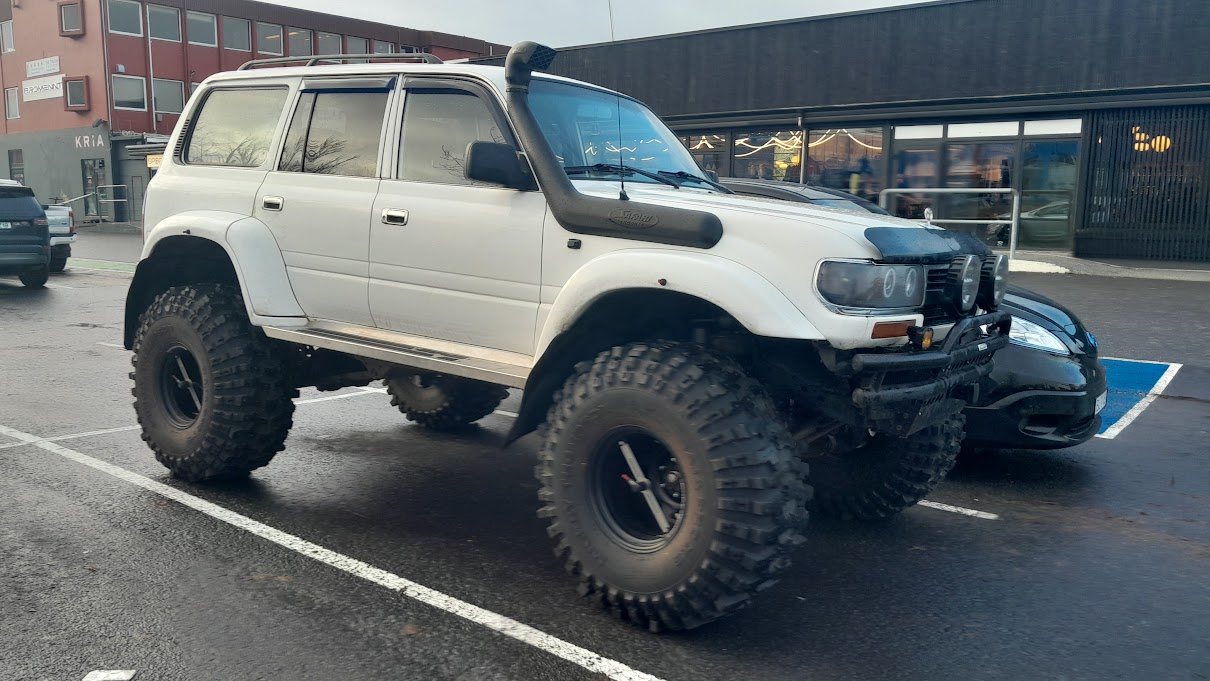
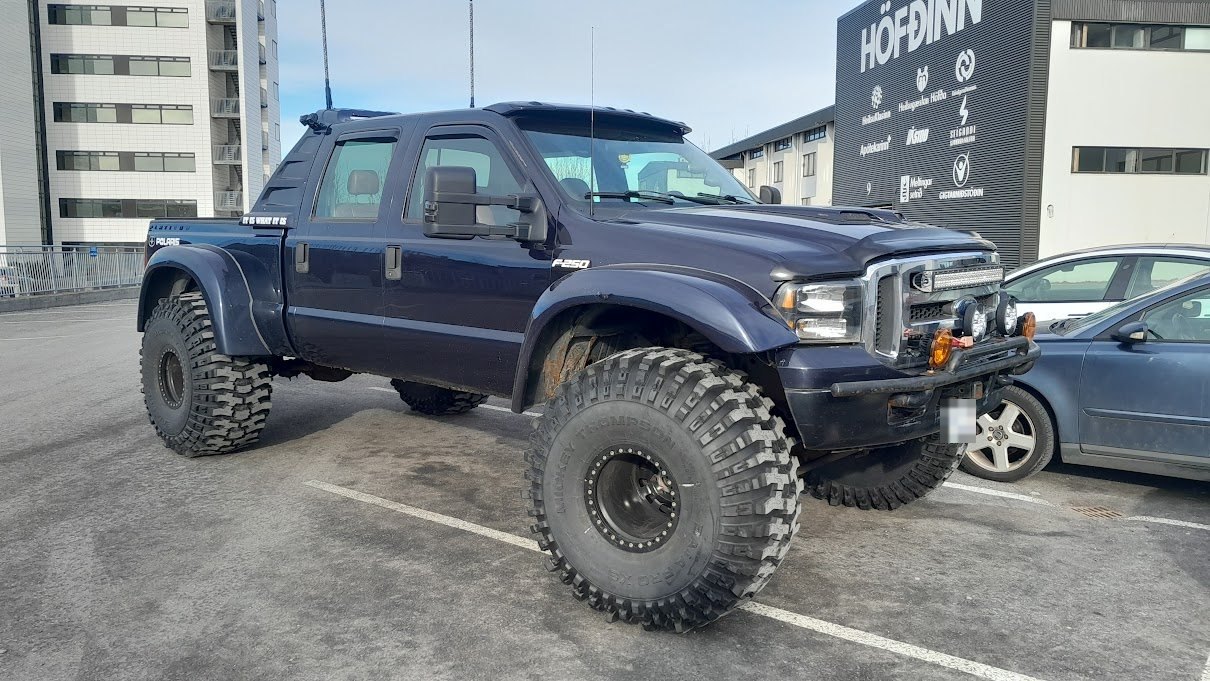
You can see 44s and 46s at work on our Spotted trucks: a Ford F-350 on Nokian 44s, a Land Cruiser 80 on TSL Boggers and a Dodge Ram 2500 on 46s.
49 to 54 inch tires and up
At this size you are building around the tires, not fitting tires to a truck.
- Interco IROK 21/49-17. 49 inches tall, 20.8 inches wide and 167 lbs.
- Mickey Thompson Baja Pro XS 17/49-20 and 19.5/54-20. Mickey Thompson calls the Baja Pro XS the world's tallest DOT-approved light truck tire. The range tops out at 21/58-24.
- Mickey Thompson Baja Claw TTC 54x19.50R20. 53.8 inches tall and 208 lbs per tire.
- Interco TSL Bogger 19.5/54. 53.6 inches tall and about 198 lbs, on 17 or 20 inch wheels.
A 54 inch tire weighs close to 100 kg (about 200 lbs). You need portal axles or heavy-duty axles, very low gears, big brakes and a frame that can take the leverage. In Iceland, trucks on 49s and 54s are mostly glacier and expedition rigs.
Icelandic snow tires
Few places in the world have as many everyday trucks on 38 to 54 inch tires as Iceland, mostly for winter driving on snow and glaciers. Aired down to just a few psi, a big tire spreads the weight of the truck so it floats on soft snow. Read more in Iceland's Super Jeeps.
Arctic Trucks, the best-known super jeep builder in Iceland, sells mostly Mickey Thompson tires today: Baja Boss, Baja Legend and even the 54 inch Baja Pro XS, next to its own AT405.
Two tires were made for these conditions:
- Arctic Trucks AT405. A 38 inch radial designed from the ground up as a winter tire, with 12 mm deep sipes from the factory. Read our AT405 Radial story.
- Nokian Hakkapeliitta 44. Developed by Nokian Tyres and Arctic Trucks and introduced in 2017. It is a 44 inch radial in size LT475/70 R17 (44x18.5R17) with 18 mm of tread, a Polar Expedition rubber compound and 172 stud holes, although it is mostly driven without studs. It is sold only through Arctic Trucks. Spotted examples: an F-350, a Grand Cherokee and an old Hilux, all on Hakkapeliitta 44s.
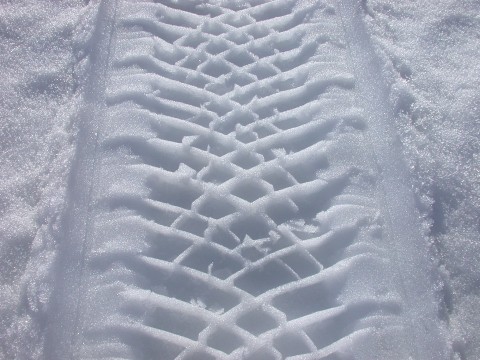
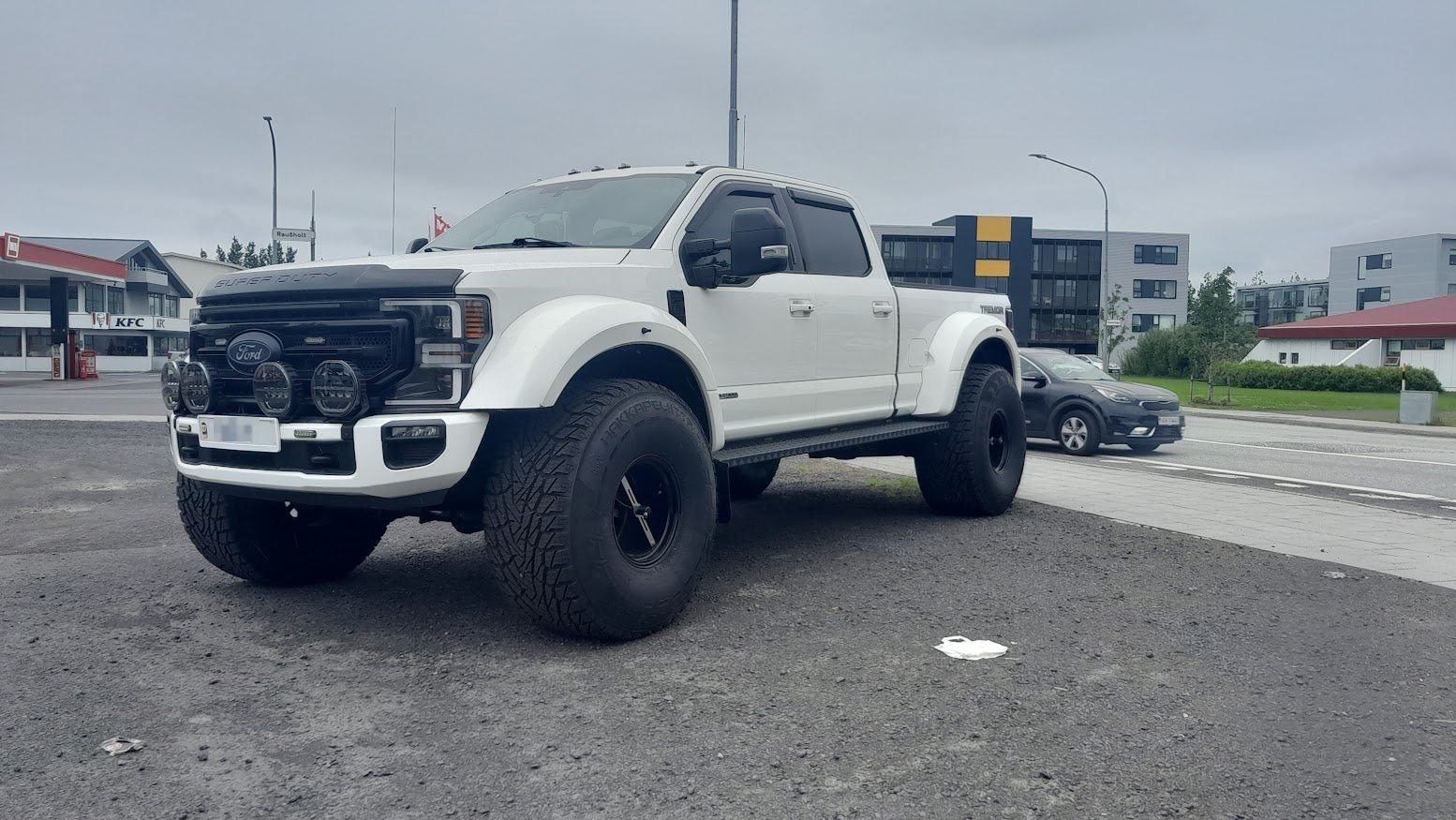
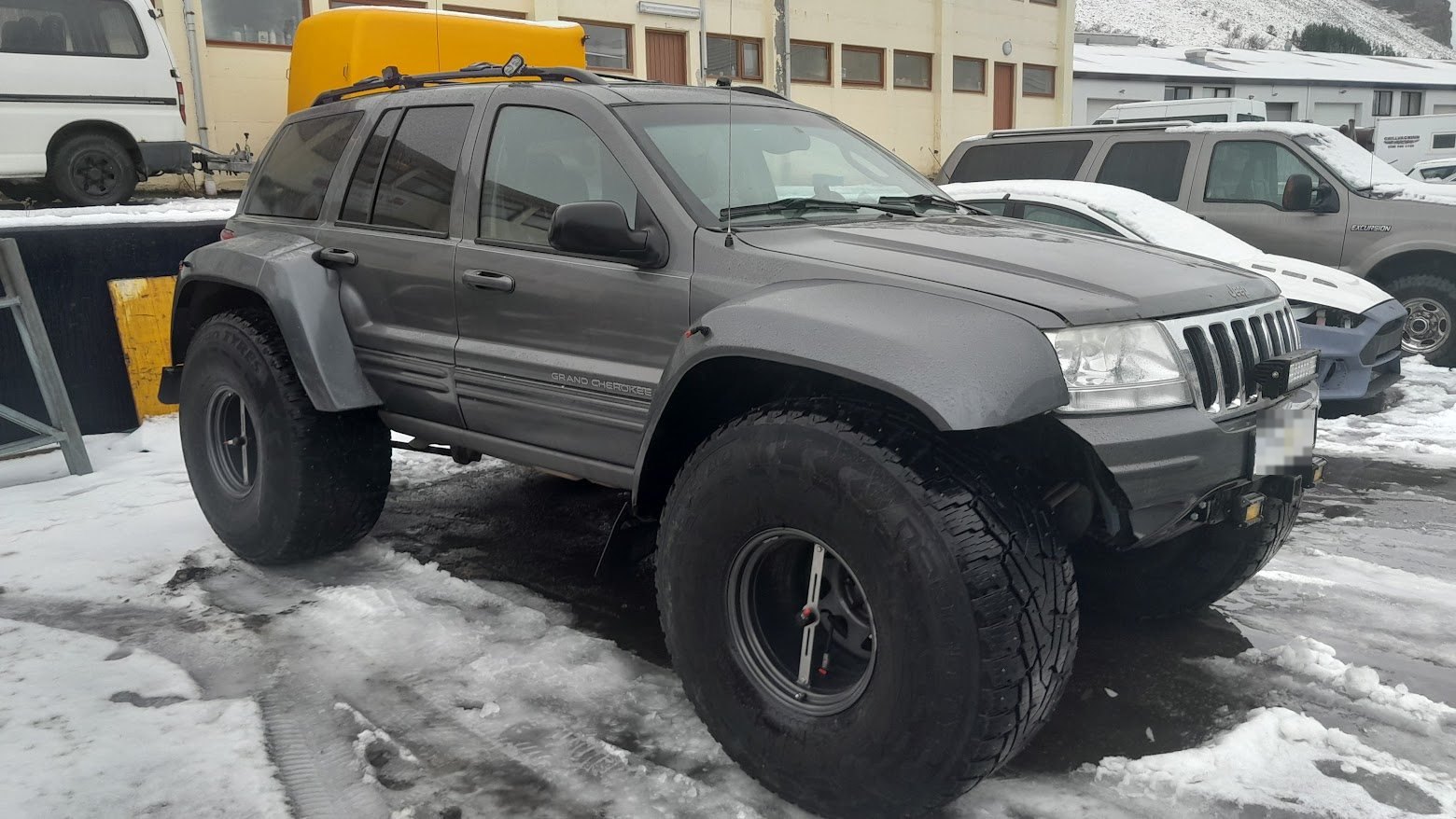
For many years the two most popular big tires in Iceland were the Monster Mudder, in 38 and 44 inches, and the 44 inch Dick Cepek Fun Country. Both are covered under the classics below.
The classics that built big-tire driving
Many of the tires that started it all are gone, but you still see them on old builds and in our stories.
- Dick Cepek Fun Country and Mud Country. Dick Cepek started his tire business in 1963 and was one of the first off-road companies. The bias Fun Country came in 44 inches, the largest tire in the Cepek line, and was known for a smooth ride for a giant bias tire. Goodyear quietly closed the Dick Cepek brand at the start of 2022 and pointed buyers to Mickey Thompson. In Iceland, the 44 inch Fun Country was a standard super jeep tire for years, and many trucks still run it. See it on SULLI, the Hilux 6x6 and an old Willys in our 4x4 Snow Pictures from 2005.
- Gumbo Monster Mudder. The trademark was filed in 1976 by Dunlap & Kyle, and it has since been cancelled. Buckshot later made the Radial Mudder up to 38 inches and bias Mudders up to 44 inches. In 38 and 44 inch sizes, Mudders were a favorite snow tire in Iceland. Read Gumbo Monster Mudder Tires: 38 and 44 Inch.
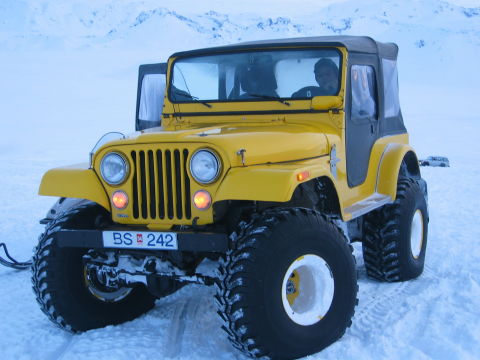
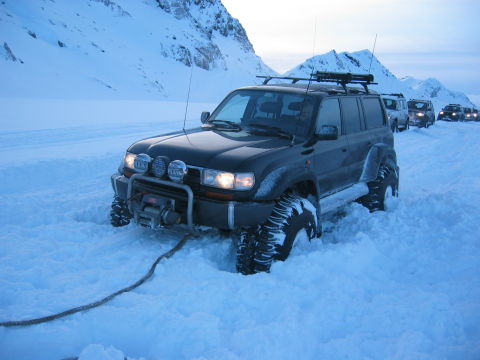
- Denman Ground Hawg. A traditional, old-school mud tire design. Denman made the bias Ground Hawg up to 44 inches and the Ground Hawg II radial up to 38 inches. You can see 38 inch Ground Hawgs on a Land Cruiser 80 and a yellow CJ5 in our 4x4 Snow Pictures from 2005. The name now belongs to Interco, whose new Cobalt M/T takes styling cues from it.
- Super Swamper TSL. The original three-stage-lug tread came out of nine years of development and testing, and it is still sold today as the TSL bias and the Bogger.
- Pit Bull Maddog. A bias mud tire that some Icelanders ran instead of Mudders. Read our Pit Bull Maddog review.
- Interco TrXus STS 44. The wide 44x21 bias tire is still in Interco's line, and you will find it on older Icelandic trucks. A reader asks about wheels and pressure for them in Wheel size with 44" STS's and psi.
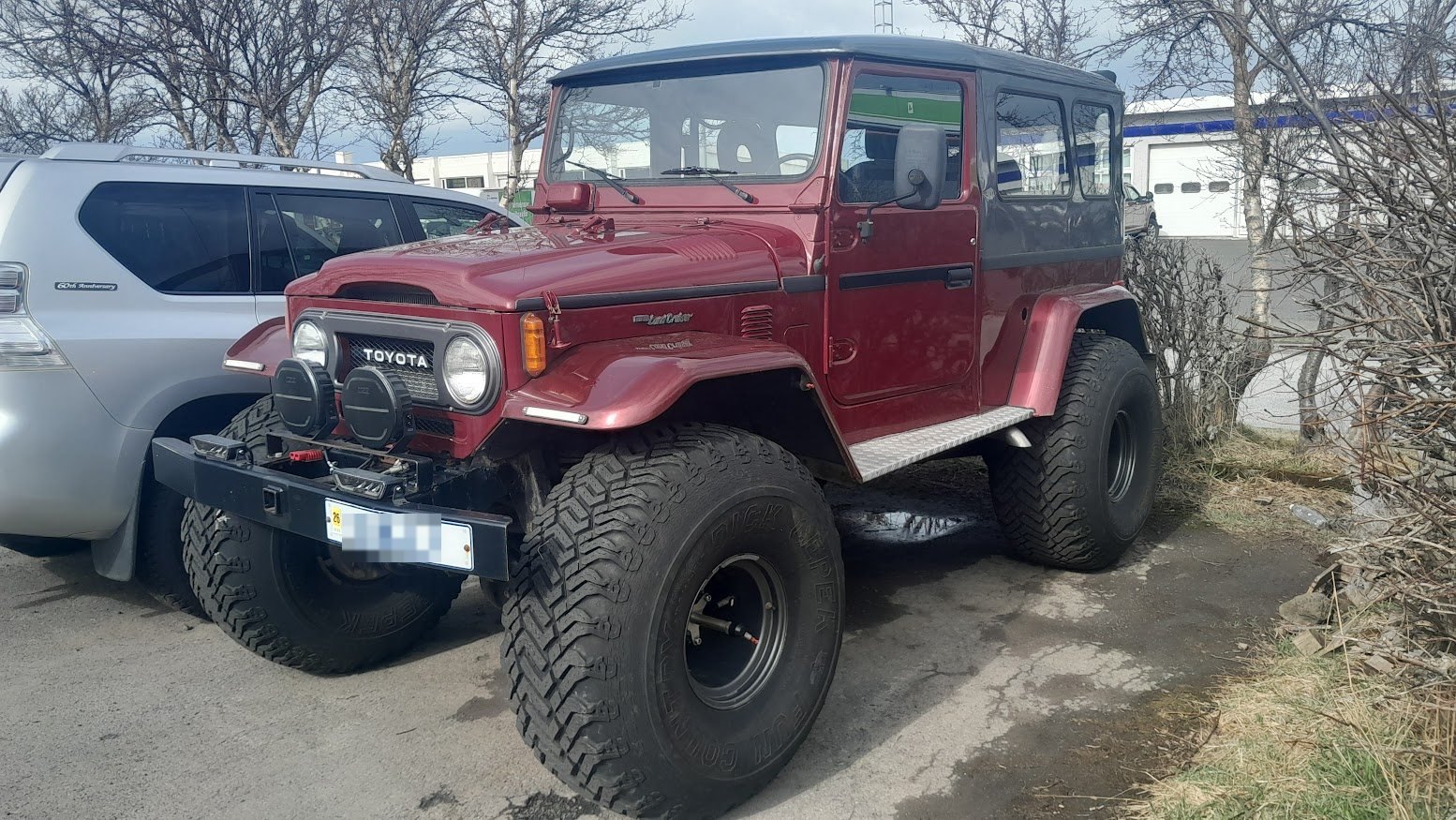
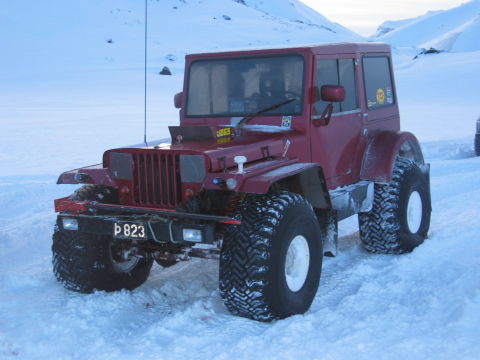

Big tire comparison
| Tire | Construction | Biggest size | Best for |
|---|---|---|---|
| BFGoodrich KM3 | Radial | 42x14.50R17 | Daily-driven lifted trucks, mixed terrain |
| Toyo Open Country M/T | Radial | 42x15.50R26 | Highway miles, big wheels |
| Nitto Trail Grappler M/T | Radial | 42x15.50R26 | Big wheels, overland trucks |
| Mickey Thompson Baja Boss | Radial | 42x13.50R17 | Daily driver on big tires, snow and trail |
| Mickey Thompson Baja Legend MTZ | Radial | 40x13.50R17 | Mud, all-round mud-terrain |
| Maxxis Trepador M8060 | Bias | 42x14.50-17 | Rocks, sand, trail |
| Interco IROK | Bias and radial | 21/49-17 | Mud, snow and rocks |
| Interco TSL Bogger | Bias | 19.5/54 | Mud, deep snow, old-school builds |
| Interco TrXus STS | Bias | 44x21 | Wide footprint, snow |
| Mickey Thompson Baja Claw TTC | Bias and radial | 54x19.50R20 | Extreme mud, rocks |
| Mickey Thompson Baja Pro XS | Bias | 21/58-24 | Tallest DOT-legal builds |
| Nokian Hakkapeliitta 44 | Radial | 44x18.5R17 | Snow and glaciers |
| Arctic Trucks AT405 | Radial | 38 inch | Snow and wet roads |
How to choose
- Start with the truck. Axles, gears, brakes and fender room decide how big you can go. Check the Big Tire Planner first.
- Be honest about where you drive. If most of your miles are on pavement, a 37 to 40 inch radial will make you happier than a 44 inch bias tire.
- Snow is different. For deep snow, width and low pressure matter more than an aggressive tread. That is why Icelanders choose wide tires and beadlock wheels.
- Count the weight. 44 inch bias tires often weigh 140 to 150 lbs each, and 54s weigh about 200 lbs. That weight is on every axle shaft, ball joint and brake.
- Budget for more than tires. Expect around $1,000 or more per tire from 44 inches up, and then the lift, gears and wheels to go with them.
Our older video on choosing off-road tires covers the basics:
FAQ
What is the biggest street-legal off-road tire?
Mickey Thompson calls its Baja Pro XS the world's tallest DOT-approved light truck tire. It goes up to 58 inches (21/58-24LT). The TSL Bogger, Baja Claw TTC and IROK also come in DOT-approved sizes of 49 to 54 inches.
Are bias tires better than radials for big trucks?
Bias tires flex and conform better at very low pressure, which helps on rocks, in mud and in deep snow, and they dominate from 44 inches up. Radials ride smoother and last longer on the highway. For a truck that is driven on the road every day, a radial up to 40 or 42 inches is usually the better choice.
What gear ratio do I need for 37s, 40s or 44s?
It depends on your stock tires and gears. As a rule of thumb, 37s on most full-size trucks need 4.56 to 4.88, and 44s usually need 5.13 or lower. Use the Big Tire Planner or the gear ratio chart for your exact numbers.
Why do Icelandic super jeeps run such big tires?
Big, wide tires aired down to a few psi spread the weight of the truck over a large area, so it floats on soft snow instead of sinking. That is how Icelanders drive across glaciers and the highlands in winter. Read Iceland's Super Jeeps.
What size tire for my truck's weight?
A good starting point for snow and soft ground: 31–33 inches for trucks up to 1,400 kg (3,100 lbs), 35–36 inches up to 1,800 kg (4,000 lbs), 38 inches up to 2,200 kg (4,850 lbs) and 44 inches up to 3,000 kg (6,600 lbs). The full table is in the section How big should you go? above.
How much does a 44 inch tire weigh?
Usually between 140 and 150 lbs for a bias tire. The Interco TrXus STS 44x21/16 weighs 150 lbs and the Baja Claw TTC 46 weighs 149 lbs. The radial Nokian Hakkapeliitta 44 is around 70 kg (about 154 lbs).